Gippsland Adventure Tours
Get Home Alive - April 3/4 2027
Get Home Alive - April 3/4 2027
Couldn't load pickup availability
Get Home Alive is a practical two day, one night immersive training program designed to give outdoor adventurers the skills, knowledge and decision making tools to manage situations when things don’t go according to plan.
Because in remote environments, the difference between an inconvenience and an emergency can come down to preparation, situational awareness and the decisions you make next.
Over the weekend, you’ll learn how to recognise developing problems before they escalate, manage uncertainty, communicate effectively and apply practical navigation, survival and fieldcraft skills.
Our Philosophy
Prepared people are better equipped to adapt.
Throughout the weekend, we teach you to slow the situation down, establish what you know, identify immediate risks, assess your resources and options, and make deliberate decisions based on the conditions in front of you.
By the end of the program, our aim is for you to recognise when a plan is beginning to fail, stabilise the situation and make practical decisions that give you and your group the best chance of getting home safely.
Program Format
Duration: 2 Days / 1 Night
Location: A private, river-based bush campground near Erica in Gippsland, just over two hours east of Melbourne. The campground is accessible by two-wheel-drive vehicles.
Accommodation: BYO tent or swag. Toilet and shower facilities are available onsite.
Experience Level: suitable for all levels. The program is suitable for bushwalkers, paddlers, backcountry skiers and snowboarders, campers, adventure racers, outdoor enthusiasts and anyone wanting to become more capable and self reliant in remote environments.
No previous survival or advanced navigation experience is required.
What’s Included
Your course fee includes:
Two full days of professional instruction with two experienced, qualified and insured outdoor instructors
Parks Victoria licensed tour operator requirements and appropriate insurances
Wilderness First Aid and emergency communications capability throughout the program
Saturday night campsite fees
Saturday and Sunday facility fees
Maps, stationery and course materials
Access to demonstration equipment and emergency gear
Practical field exercises and scenario-based learning
What You’ll Learn
By the end of the weekend, you will have developed practical skills and strategies to:
Plan for the unexpected
Build realistic contingency plans before leaving home and identify the equipment, information and resources that may become critical if your trip changes.
Navigate when the plan changes
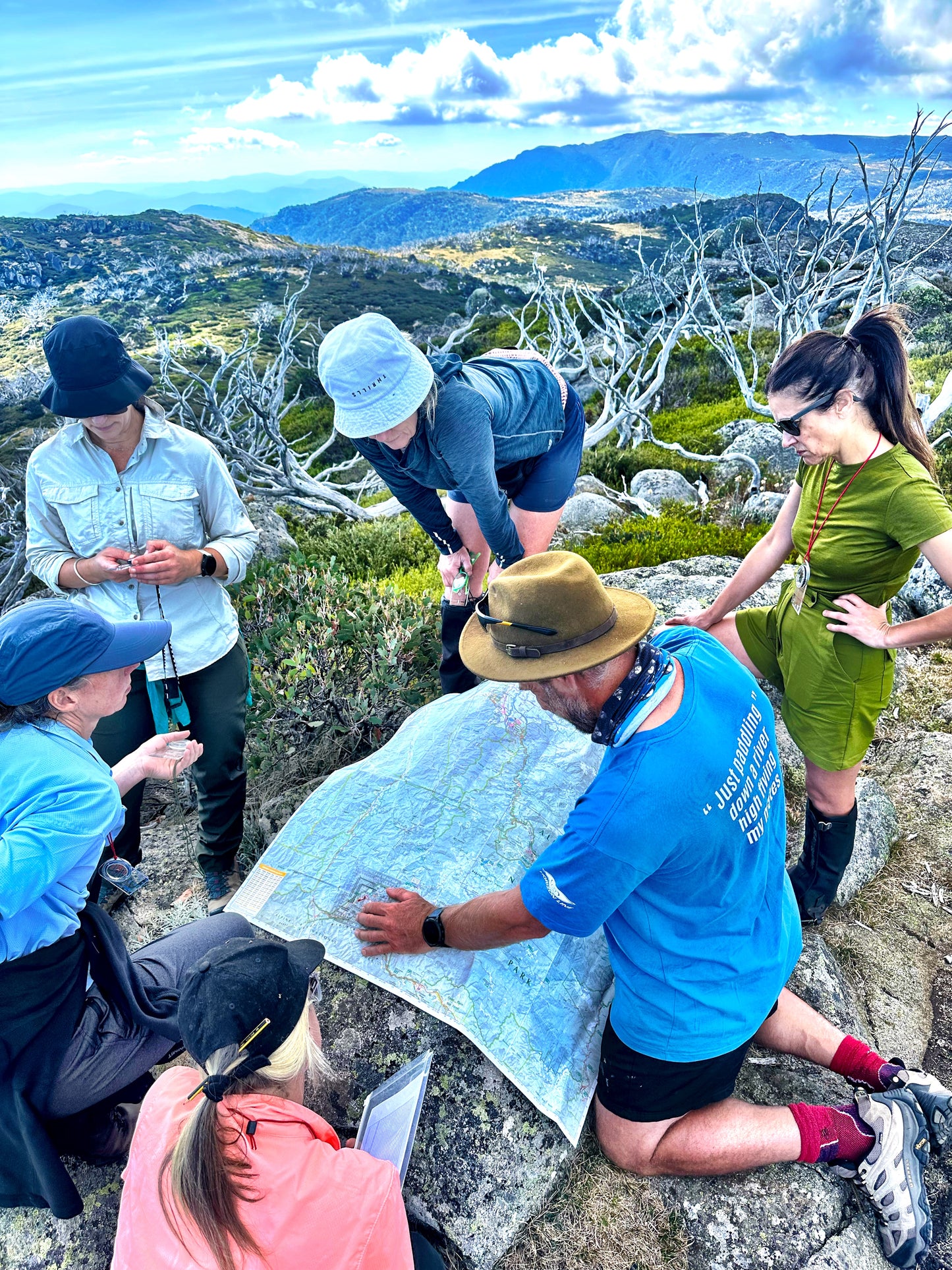
Plan safe and efficient routes, understand terrain and use navigation skills to regain situational awareness when you’re uncertain of your location.
Understand how people become lost
Explore the behavioural and environmental factors that contribute to people becoming lost or disoriented and learn what to do when you realise you’re no longer where you thought you were.
Make better decisions under pressure
Develop a practical decision making framework for situations involving uncertainty, fatigue, time pressure, deteriorating weather or fear.
Recognise when it’s time to change the plan
Learn to make realistic decisions about whether to continue, turn around, choose an alternative route, establish an emergency camp or call for assistance.
Manage exposure and environmental hazards
Understand the effects of cold, heat, wind, wet conditions, fatigue, bushfire and inadequate equipment and how seemingly minor problems can compound.
Create emergency shelter
Learn practical shelter principles using both carried equipment and available resources.
Locate and manage water
Understand water planning, potential water sources and considerations around collecting and treating water in remote environments.
Manage river crossings
Learn how to assess river hazards, determine whether a crossing is appropriate and practise safe crossing techniques in a controlled environment.
Use emergency communications effectively
Understand the role and limitations of Personal Locator Beacons (PLBs), satellite communication devices and radios, and when escalation to emergency services is appropriate.
Manage fear and uncertainty
Understand how stress affects judgement and learn techniques for maintaining clear, sequential thinking when a situation begins to deteriorate.
Develop your own preparedness system
Create a practical approach to equipment, communication, route planning, contingencies and emergency preparation that can be applied to your future adventures.
Wilderness first aid and emergency response
Practical Scenarios
Get Home Alive is not designed to be taught entirely from a chair.
Throughout the weekend, participants work through practical exercises and realistic scenarios designed to bring individual skills together.
These may include:
Becoming lost or disoriented
Responding to an injured or incapacitated group member
Emergency communication and escalation
Unexpected river crossings
Sudden weather deterioration
Equipment failure
Running out of daylight
Emergency shelter and an unplanned overnight stay
Managing fatigue, cold, stress and fear
Route reassessment and changing objectives
Camp setup and weather assessment
Packing and preparing for contingencies
Group communication and decision-making
You’ll also be introduced to practical field techniques developed through our instructors’ combined decades of experience in remote-area travel, expeditioning, rescue environments and outdoor education.
Meet Your Instructors
Paddy Howlett
Paddy is an experienced outdoor educator with more than 30 years of experience operating in remote and demanding environments in Australia and internationally.
A former Special Operations serviceman, Paddy’s background includes military survival training, remote-area navigation, fieldcraft, aviation rescue operations and instructing teams in environments where risk management, communication, teamwork and clear decision-making are essential.
He has worked for Babcock as aircrew on rescue helicopter operations around Australia, including HEMS 2 in Victoria and operations based in Horn Island and Adelaide. His aviation rescue experience provides a valuable perspective on what happens at the other end of an emergency call — and why good preparation, accurate information and appropriate decision-making in the field matter.
Paddy is also qualified in Swiftwater Rescue and has extensive experience in bush navigation, survival, paddling, adventure racing and remote expedition travel.
Now based in Gippsland, he brings this experience into civilian outdoor education, helping participants develop practical systems for navigating, preparing for emergencies and remaining effective when circumstances change.
His approach focuses not simply on what to do, but on understanding why you’re doing it and what decision should come next.
Kelly van den Berg
Kelly is a professional outdoor educator, mountain guide and qualified Nordic ski instructor with extensive experience across alpine, river and wilderness environments in Gippsland and throughout Australia, as well as international expedition experience.
Her work spans outdoor education, navigation, paddling, backcountry travel and expedition leadership, with a strong emphasis on developing capable and independent participants rather than simply leading people through an environment.
Kelly is Swiftwater Rescue qualified and has completed Expedition Medicine through the University of Tasmania and Canadian Avalanche Association Operations Level 1 training. She also works across mountain and river environments where changing weather, terrain, water conditions and group dynamics require continual risk assessment and decision making.
Her teaching focuses strongly on situational awareness, preparation, human factors and maintaining clear thinking when circumstances change.
Together, Kelly and Paddy combine complementary backgrounds in outdoor education, expedition travel, navigation, rescue environments and remote area risk management.
Get Home Alive draws on that combined experience to teach practical skills for ordinary adventurers facing extraordinary circumstances.
Booking & Cancellation Conditions
Please choose your course date carefully.
A non-refundable 10% booking fee applies at the time of purchase.
14 days or more before your course:
Bookings may be cancelled or rescheduled subject to a 10% fee.
Between 7 and 14 days before your course:
A 50% cancellation or rescheduling fee applies.
Less than 7 days before your course:
The full course fee is forfeited.
No-show:
The full course fee is forfeited.
Get Home Alive
You can’t control everything that happens in the outdoors.
You can control how well you prepare for it — and what you do next.
Share